

Trinity Leeds
Leeds, UK
The challenge
What we set out to solve
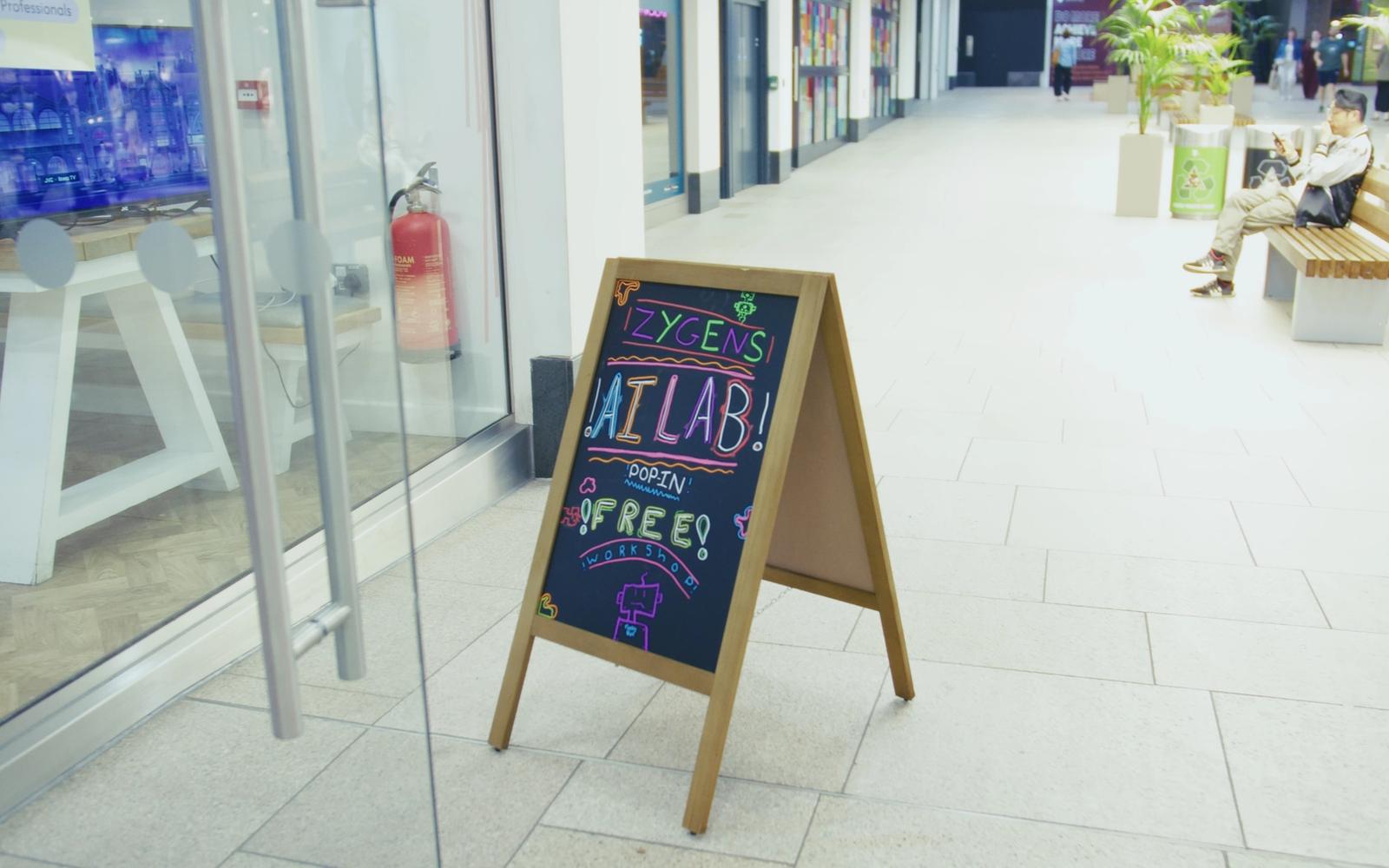
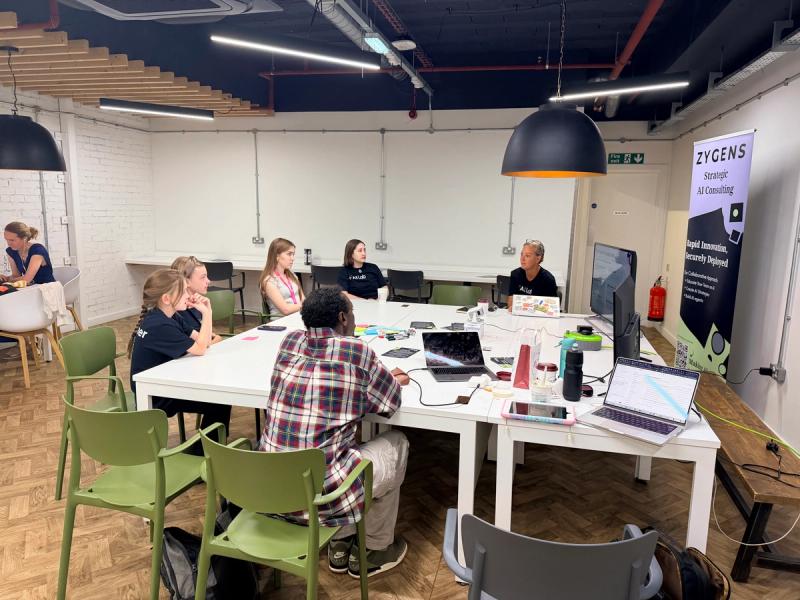
Professionals from a range of business backgrounds knew AI could help with productivity, internal processes and decision-making, but not how to start safely. They wanted hands-on — tools, yes, but also risk, prompting, and how to spot a use case that's actually worth doing. The public session had a different problem. AI had already arrived for these people whether they'd asked for it or not: AI answers sitting at the top of Google, assistants appearing in apps they already used. Ages ran from 10 to 80s. Nobody had sat down with them and shown them how any of it works, or that they were allowed to have a go.
What we delivered
How the lab was designed
- 10 Business Professionals
- 2 Prompt Frameworks Introduced
What happened
On the day, in the room
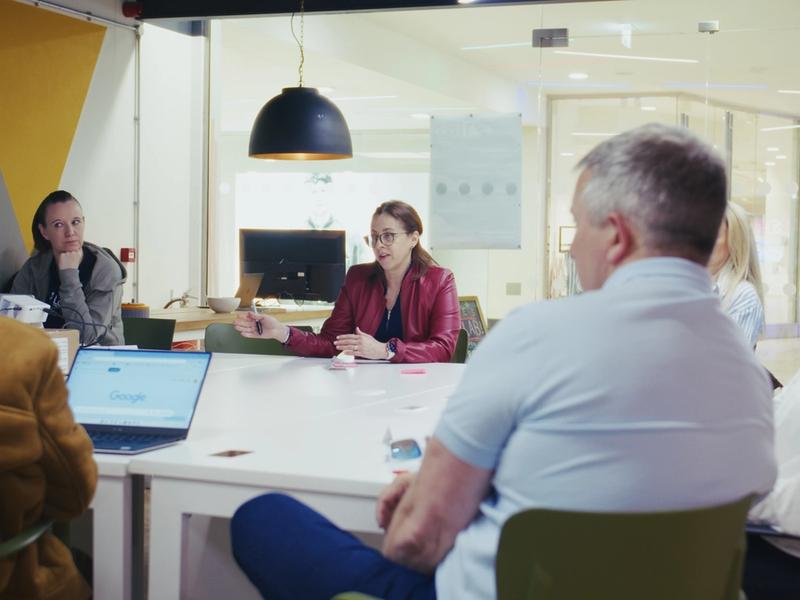
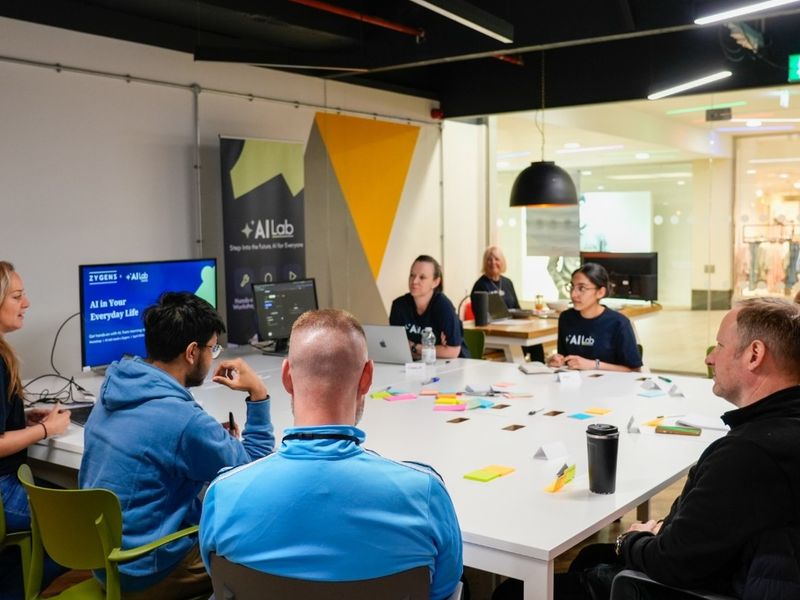
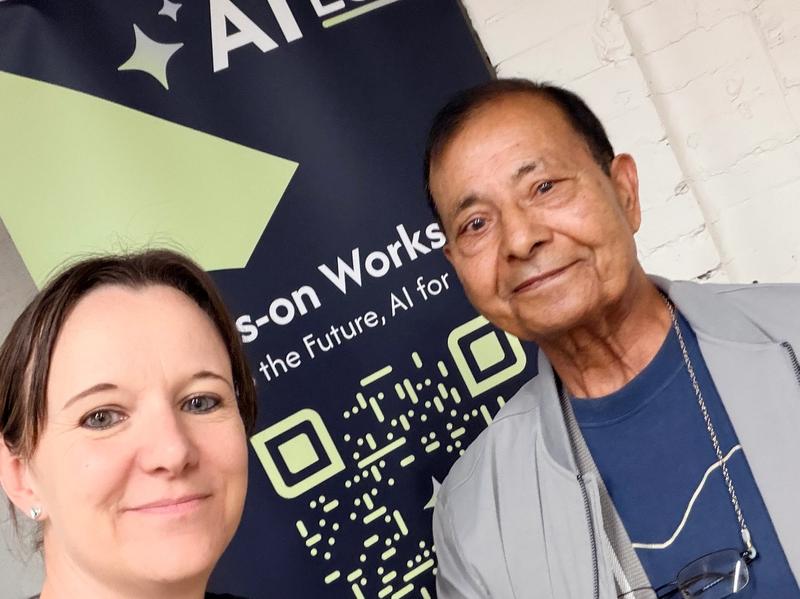
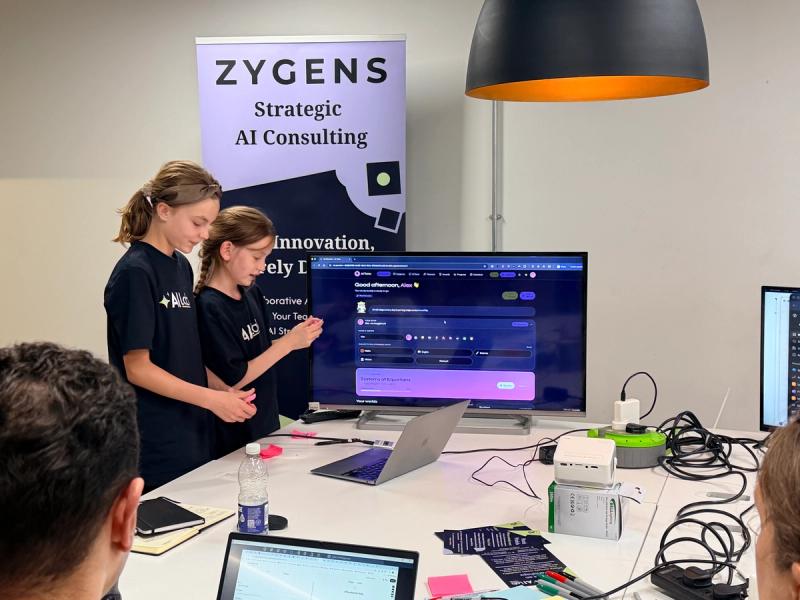
The youngest person in the room was 10, building a tuition app in Lovable. The oldest were in their 80s, working out what Google's AI results actually are and setting up their first ChatGPT projects so the tool holds onto what they're working on instead of starting cold every time. Seventy years apart, same tools, same afternoon. The AI for Business session ran alongside it. We opened with what goes wrong: bias, hallucinations, data security, confidentiality, tone and how to check an output before you act on it. Then how the thing works: data, training, prediction. Then agentic workflows and Domain-Driven Agent Design. Two prompting frameworks, RACE and COSTAR. Then 'Pain to Gains': map a real business pain, prototype an agent against it. The room produced DailyUpdate Detective, pulling financial and political market updates, and Genius Invoice for invoicing. What changed by the end wasn't knowledge, it was nerve. People arrived worried about getting it wrong and left with a thing they'd made themselves, which is a hard argument to unmake. The questions shifted from "is this safe to use" to "what else could I point it at". Most people left mid-experiment rather than finished, which is the right place to leave them.
What people built
Real tools, made by real attendees
Gallery
From the day
Related stories
More proof from the labs
Our Pilot to Proof Event
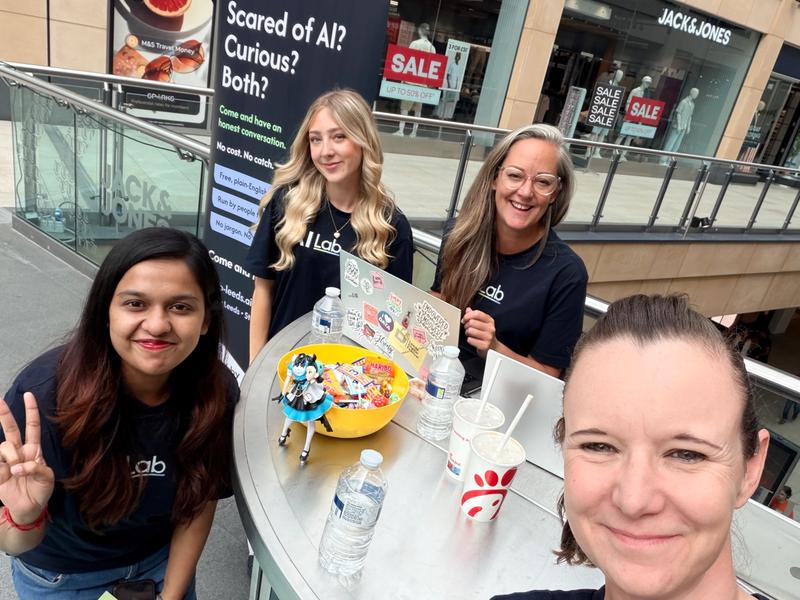
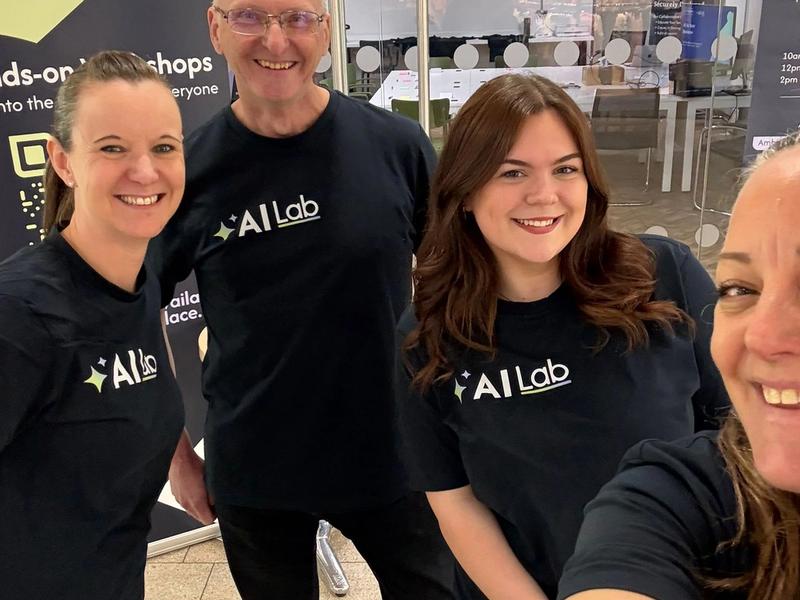
AI Lab ran three days of sessions at Trinity Leeds, in the middle of a working shopping centre. Six sessions in all, split between a one-hour introduction for complete beginners and a two-hour session for small business owners. Four in five people who came had never used AI before. By the time they left, each of them had built something that worked.
Read the story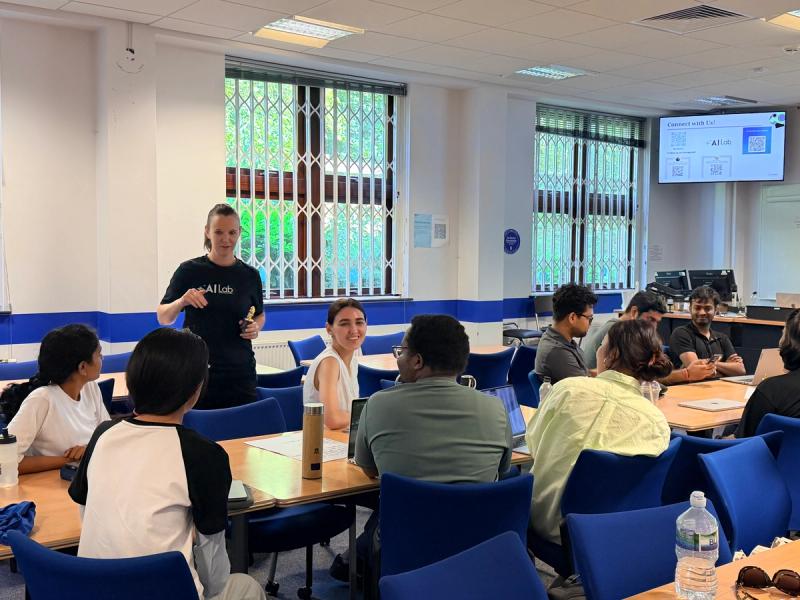
Already using AI, missing the guardrails
This LUBS group didn't need persuading. Between them they were already running six AI tools across research, job applications, revision and planning. What none of them had was a way to judge when to trust the output. The session put reliability, bias and accountability at the centre, then split the room into three teams, who each designed and built a working agent in three hours in Microsoft Copilot.
Read the story