
MBA students build their first AI agents
Leeds MBA students went from using AI tools to designing and building working agents

Leeds University Business School
Leeds, UK
The challenge
What we set out to solve
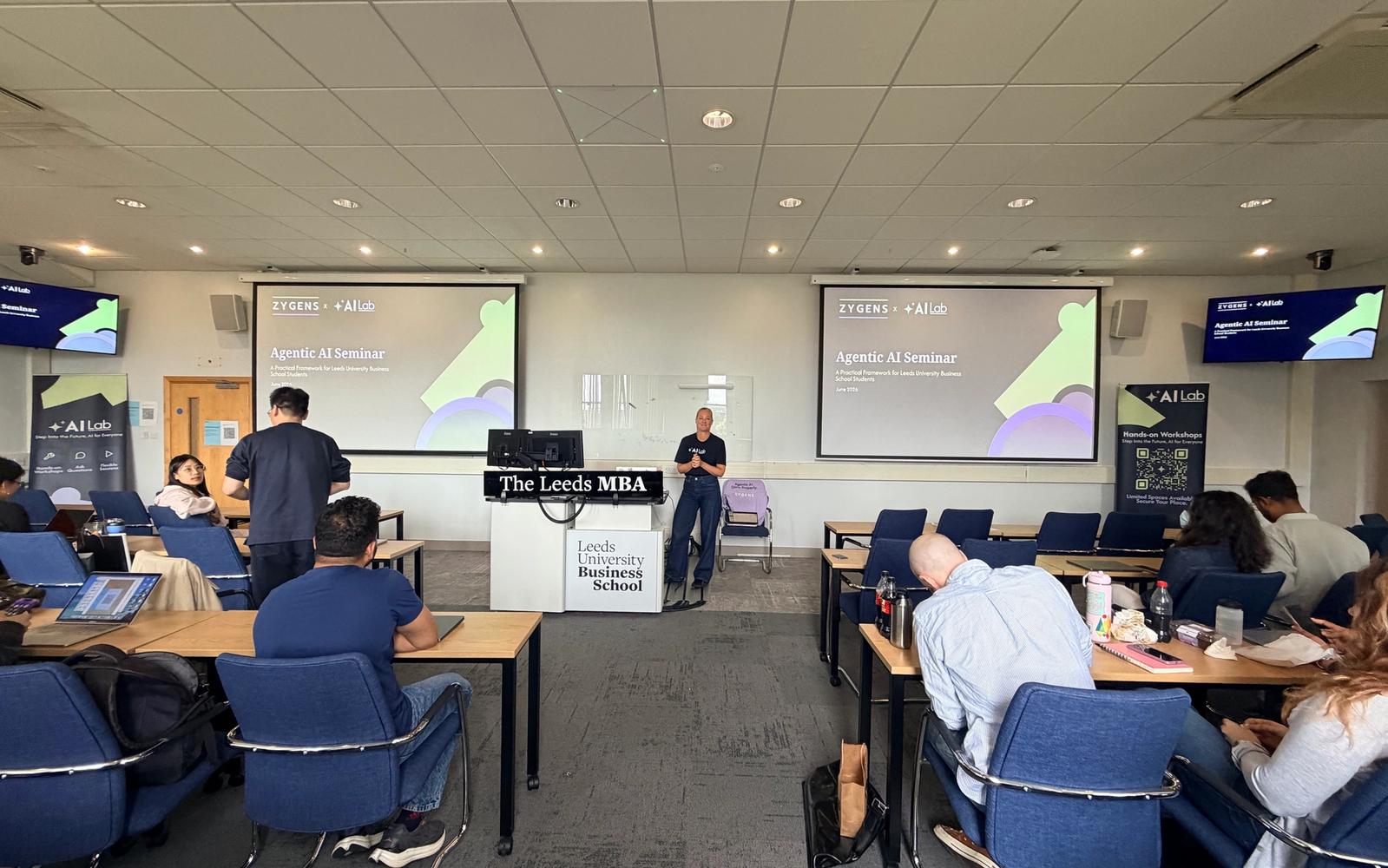
The Leeds MBA cohort were not AI beginners. They were using tools for research, writing and admin already. But asked to rate their own knowledge, the average came out at 3.07 out of 10, and confidence discussing AI in a business context sat at 3.14. That gap is the interesting part: they could operate the tools and still had no framework for deciding where an agent belongs in a business, what it should be allowed to do, or how to argue for it to a board. Using AI and designing with it are different skills, and only one of them was in the room.
What we delivered
How the lab was designed
- A three-hour hands-on Agentic AI Lab for the Leeds MBA cohort
- Foundations: LLMs, generative AI, agents, ethics and regulation
- Use case discovery using pain-to-gain and risk/value prioritisation
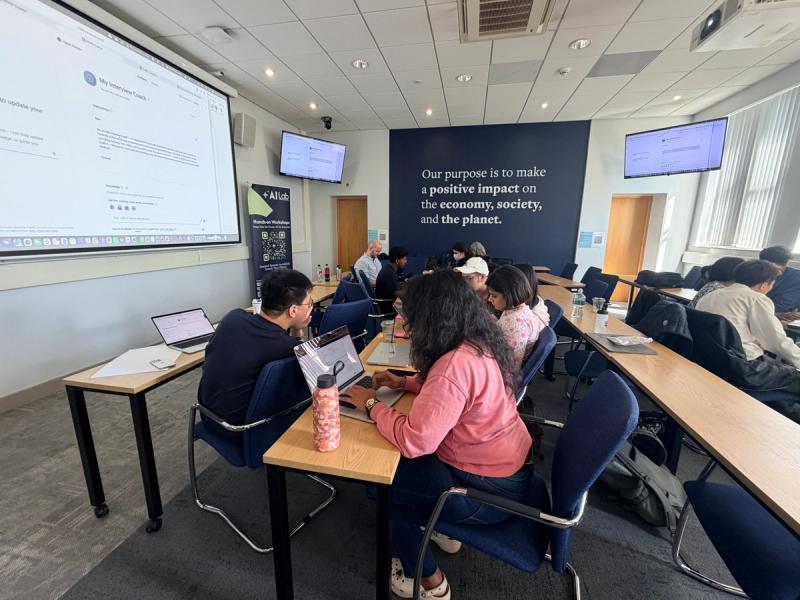
- Build time in Microsoft Copilot Agent Builder, five teams working in parallel
- Team demonstrations of each working agent to the room
What happened
On the day, in the room
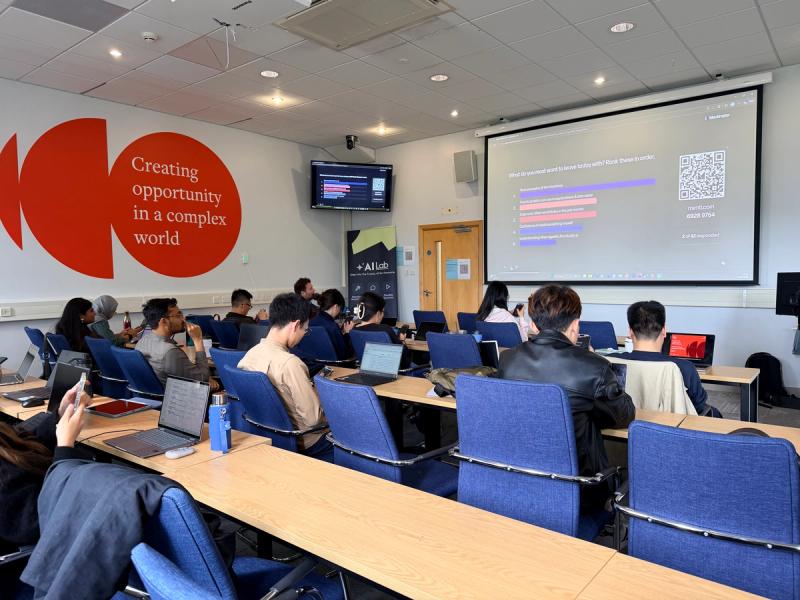
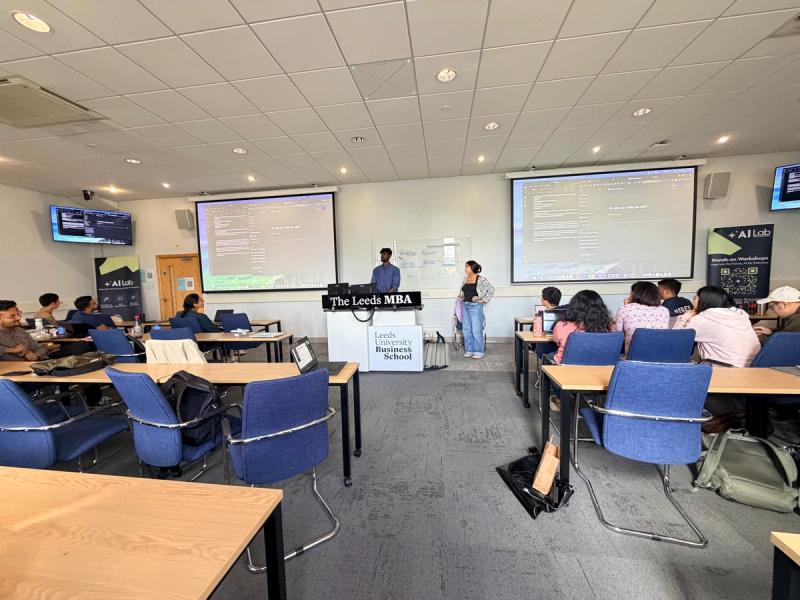
The room split into five teams, each told to find a real friction first and only then think about the technology. What came back was a good indication of what an MBA cohort actually worries about. One team built Get me a Job Karen, an agent that tailors a CV to a specific application. Unprompted, they built in a no-fabrication guardrail, the agent is not permitted to invent experience. That was the moment the framing landed. Nobody had asked them to think about guardrails as part of the design; they got there because they were building something they would personally have to stand behind. The rest ranged wider than expected. Frost Me Gently generates weekly recipes for a sweet goods business. Alan the Agent handles personalised travel planning against a budget. Funday Friday matches Instagram influencers to brands, cutting out the manual discovery slog. A fifth team built a day scheduler and health tracker to pull fragmented appointments and wellbeing data into one place. Each team then demonstrated to the room, which is where the real learning happened, watching four other teams solve a problem you had not considered, in a tool you had all learned an hour ago. The strongest theme in the feedback was time. Students wanted more building and less framing. One wrote: "More practical time to build agents, less theory, overall loved it." That is a good complaint to have, and it is the one shaping how the next LUBS block gets structured.
What people built
Real tools, made by real attendees
Gallery
From the day
Related stories
More proof from the labs
Already using AI, missing the guardrails
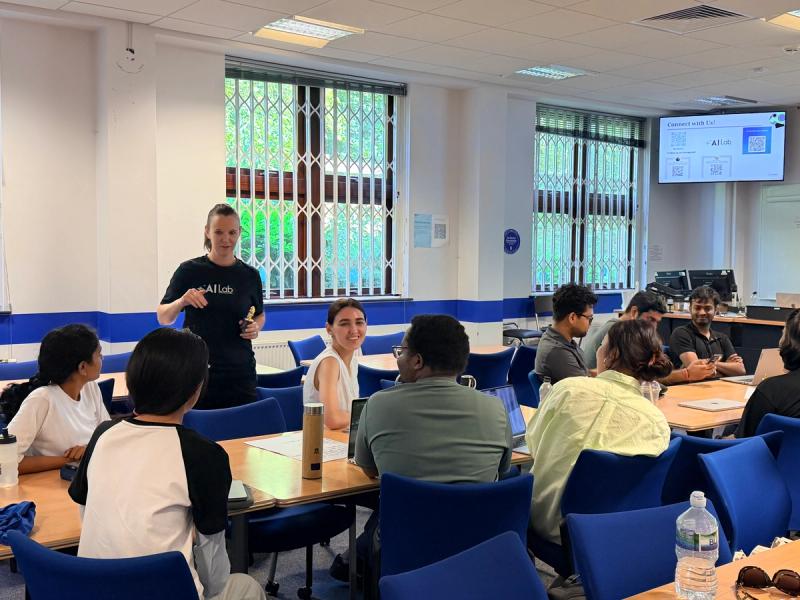
This LUBS group didn't need persuading. Between them they were already running six AI tools across research, job applications, revision and planning. What none of them had was a way to judge when to trust the output. The session put reliability, bias and accountability at the centre, then split the room into three teams, who each designed and built a working agent in three hours in Microsoft Copilot.
Read the story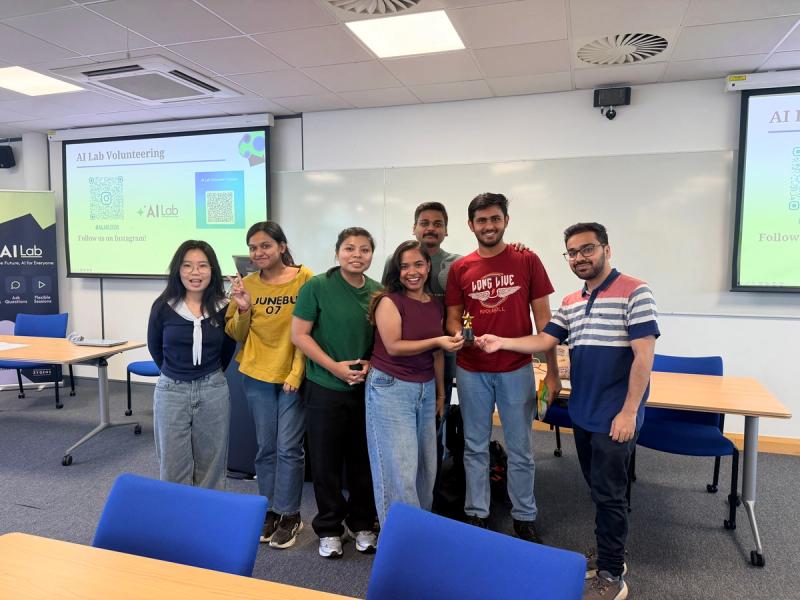
Students name the problem, then build the agent
Forty-one LUBS students opened the session with a word cloud that ran hot both ways, curious, excited, powerful, alongside privacy, fake news, replacement. AI Lab held both. By the end the room had named seven agent concepts, each starting from a real friction in their own lives: job applications, travel planning, food, fitness, finding a partner.
Read the story