Students name the problem, then build the agent
A large LUBS group turned everyday frictions into agent ideas in a single session

Leeds University Business School
Leeds, UK
The challenge
What we set out to solve
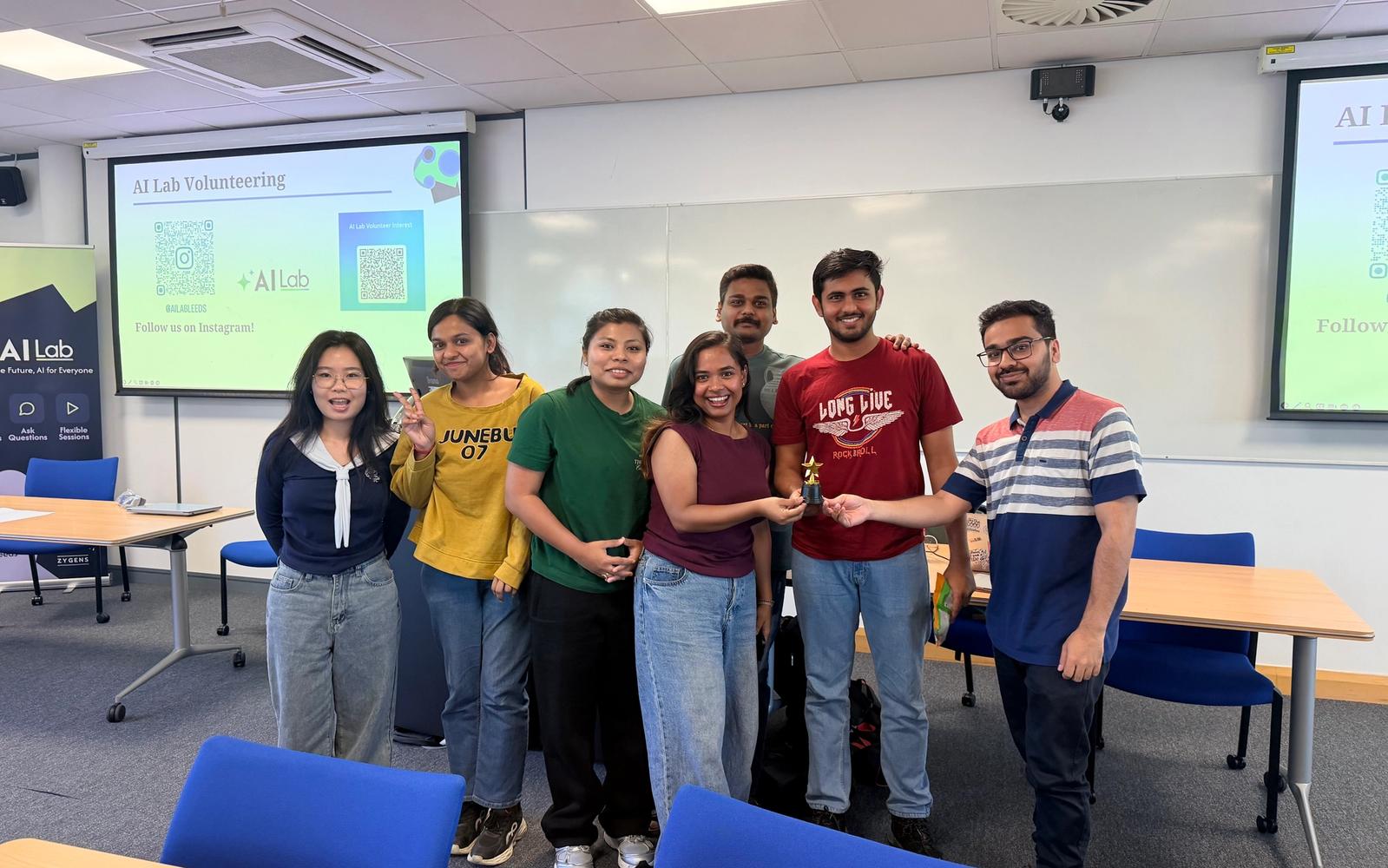
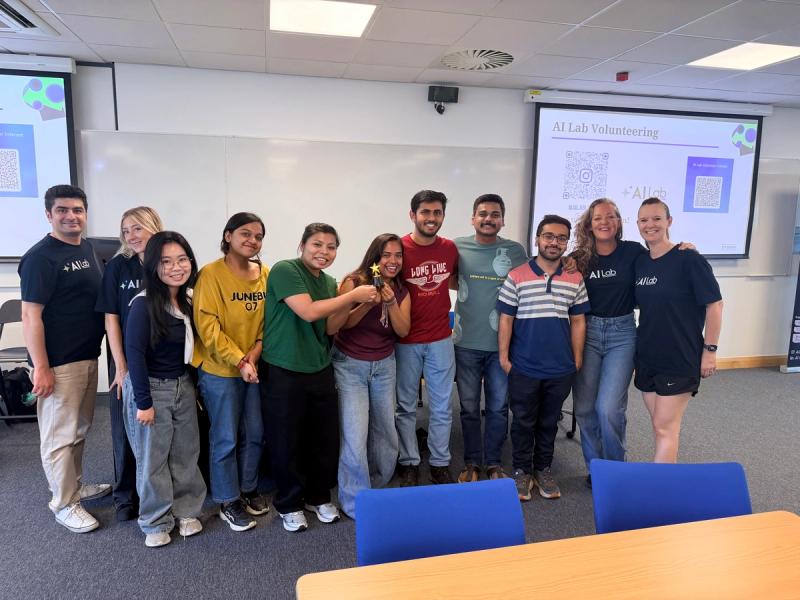
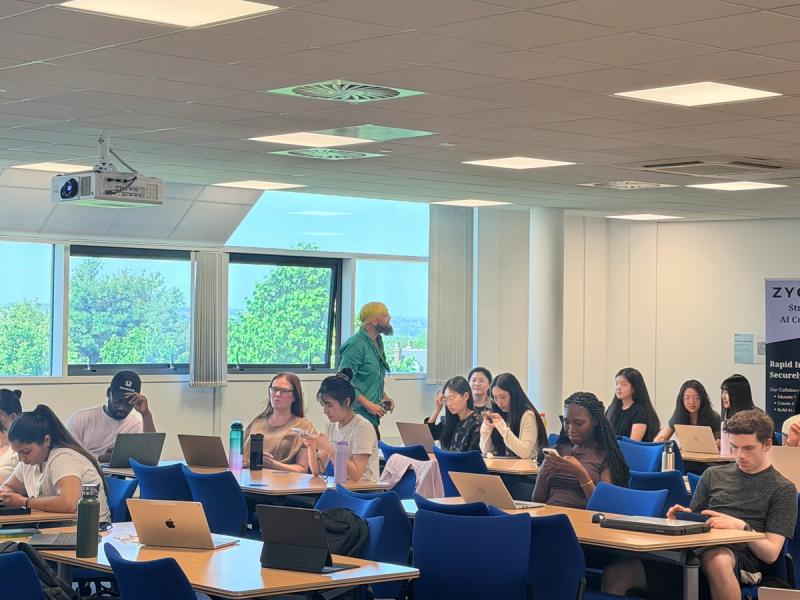
This was one of the larger LUBS group, 41 students answered the opening question and 50 took part in polling across the session. They did not arrive neutral. The opening word clouds put curious, excited, useful and powerful directly alongside privacy, replacement, fake news, data security and laziness. Some students were worried about being replaced by the thing they were about to spend two hours learning. A session that only sold the upside would have lost half the room in the first ten minutes.
What we delivered
How the lab was designed
- A hands-on session for a large LUBS student group
- Live polling on confidence, current AI use and concerns
- Clear framing of generative AI versus agentic AI
- Use case discovery grounded in personal and employability frictions
- Group ideation, naming and shaping agent concepts
- Discussion of business value, risk and guardrails
What happened
On the day, in the room
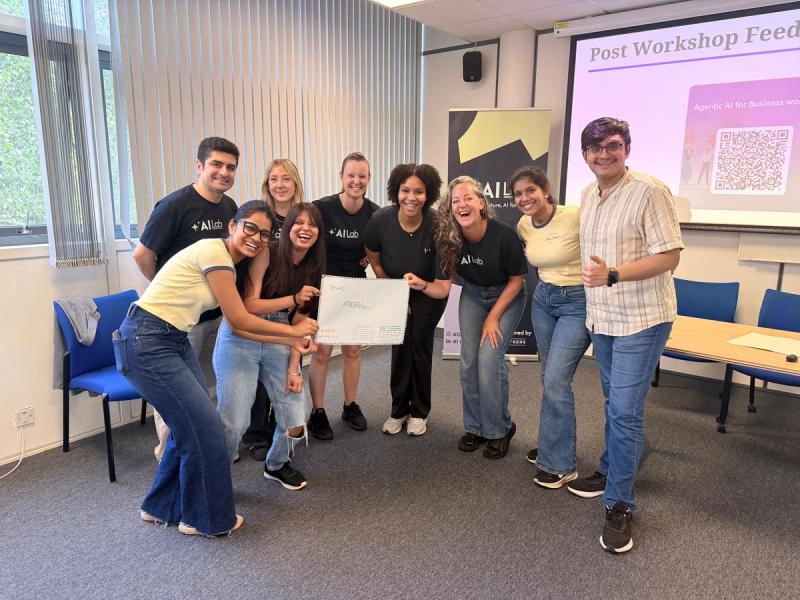
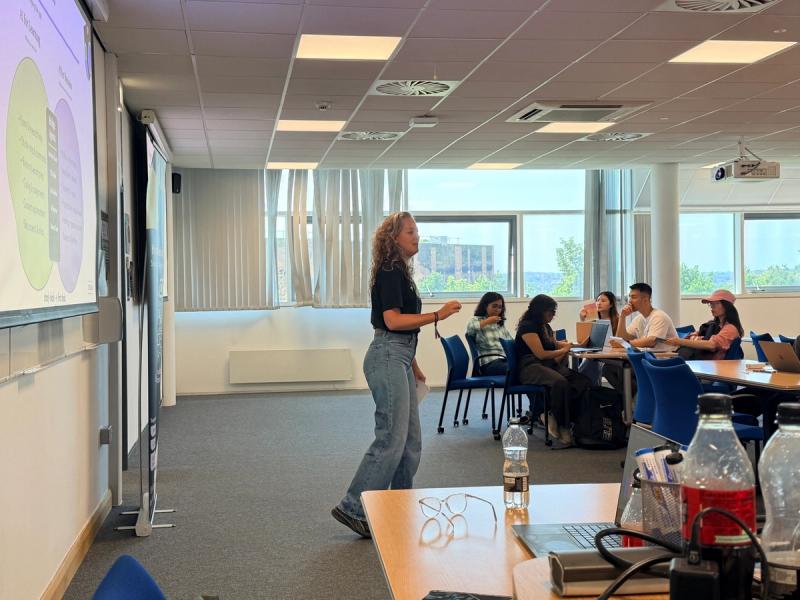
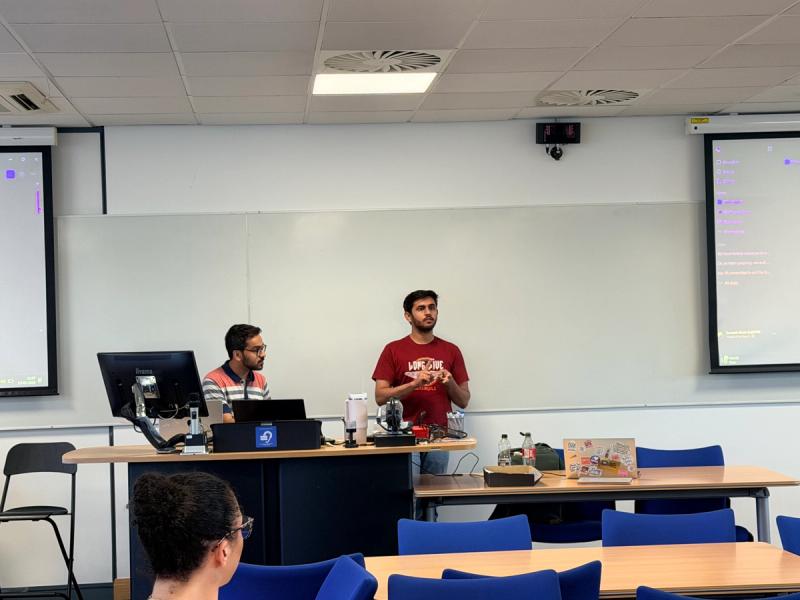
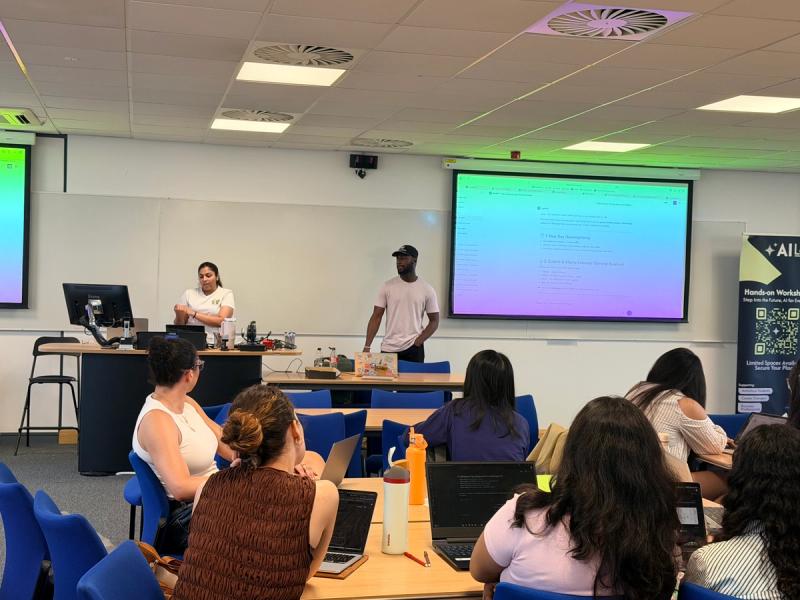
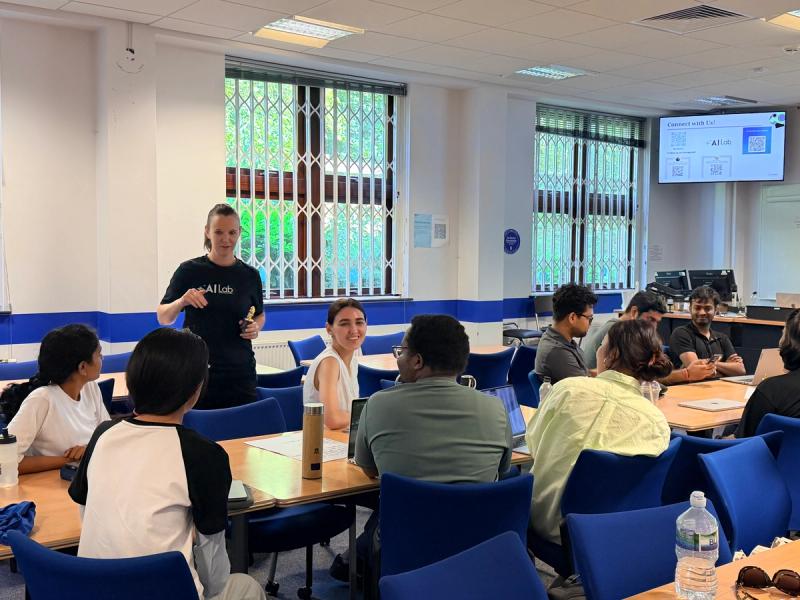
The session opened with polling rather than presenting, which meant the concerns were on the screen in front of everyone before any claims about AI had been made. Privacy, accuracy, fake news, over-reliance and job replacement all came up in the students' own words. Naming them early made the rest of the session easier, nobody had to sit on an objection for two hours. The framing work was generative AI versus agentic AI: the difference between asking a tool for something and giving it a job. Then the room was pushed to find a friction of their own rather than a business case in the abstract. What came back was unfiltered and better for it. Pascal - a private pet chameleon that helps with job applications. CV Buddy, aimed squarely at the repetitive grind of tailoring applications. EasyTravel for trip planning. PantryBoss for food and pantry planning. GymGPT for fitness. Hungri for meals. And Lovebug, for finding a partner. Two things stand out. First, employability came up twice independently, in Pascal and CV Buddy - the job hunt is the friction this cohort feels most. Second, nobody needed a template to name an agent. Given a pain, a group of students will define a gain and give it a name in minutes. That instinct is the thing worth building on. The concerns raised at the start did not go away, and that turned out to be useful: guardrails, validation and privacy stopped being theory and became part of designing the thing.
What people built
Real tools, made by real attendees
Gallery
From the day
Related stories
More proof from the labs
Already using AI, missing the guardrails
This LUBS group didn't need persuading. Between them they were already running six AI tools across research, job applications, revision and planning. What none of them had was a way to judge when to trust the output. The session put reliability, bias and accountability at the centre, then split the room into three teams, who each designed and built a working agent in three hours in Microsoft Copilot.
Read the story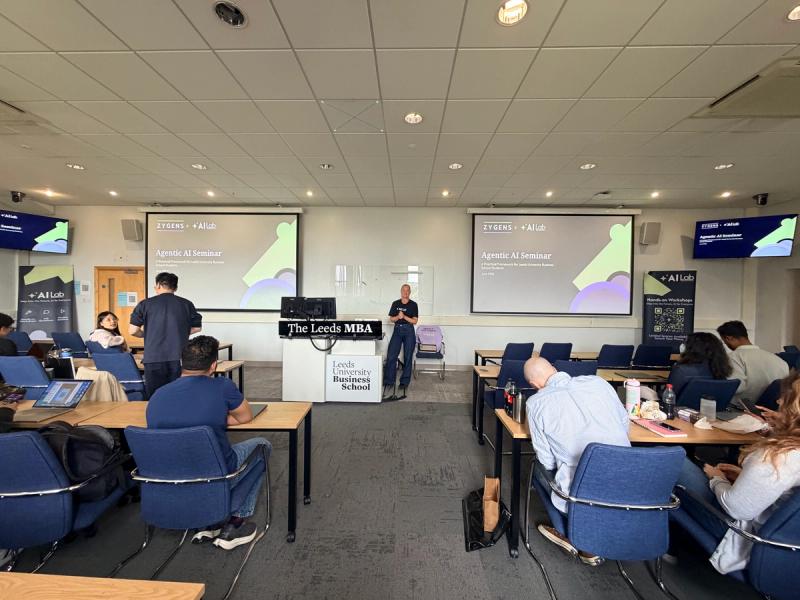
MBA students build their first AI agents
The Leeds MBA cohort could all use AI tools. Not many had built an agent. Over three hours at Leeds University Business School, five teams found a real friction, designed an agent to fix it, and built it in Microsoft Copilot, then demonstrated it to the room. Self-rated AI knowledge went from 3.07 out of 10 to 7.87, and 74% left feeling prepared to apply AI at work.
Read the story