From AI curiosity to workplace confidence
Business school students moved from vague AI awareness to practical, usable skill

Leeds University Business School
Leeds, UK
The challenge
What we set out to solve
LUBS students knew AI mattered. Most had used a chatbot, some for coursework. What they did not have was a sense of how any of it connects to the work they will actually be paid to do, or the confidence to say anything about it in a job interview. Self-rated AI knowledge across the cohort averaged 5.03 out of 10 before the session, and the spread was wide: some students were experimenting daily, others had barely touched it. The school needed something that would work for both ends of that range in a single room.
What we delivered
How the lab was designed
- A hands-on AI in Business session for LUBS students
- Practical prompting and structured interaction with AI tools
- Applied work on CVs, applications and everyday workplace tasks
- Hands-on time shaping agent-style outputs
- Open discussion of limits, accuracy and responsible use
- Pre- and post-session measurement of self-rated knowledge
What happened
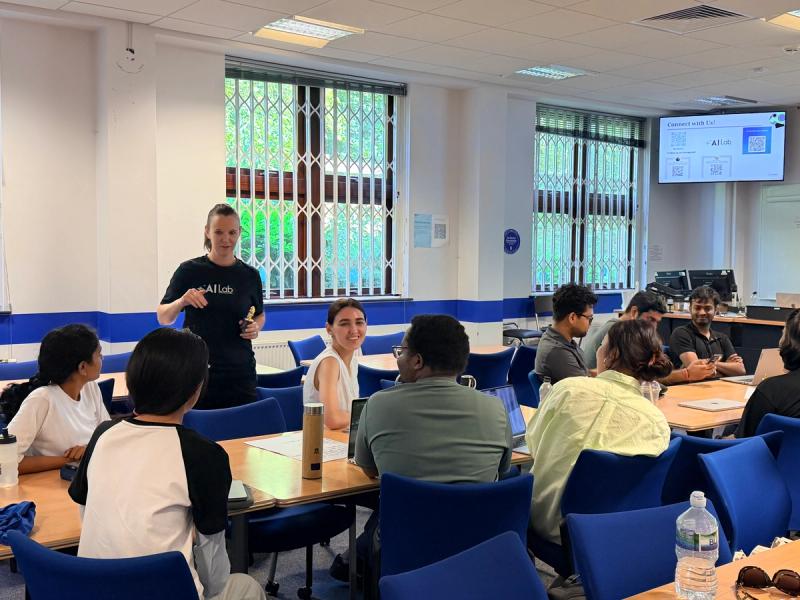
On the day, in the room
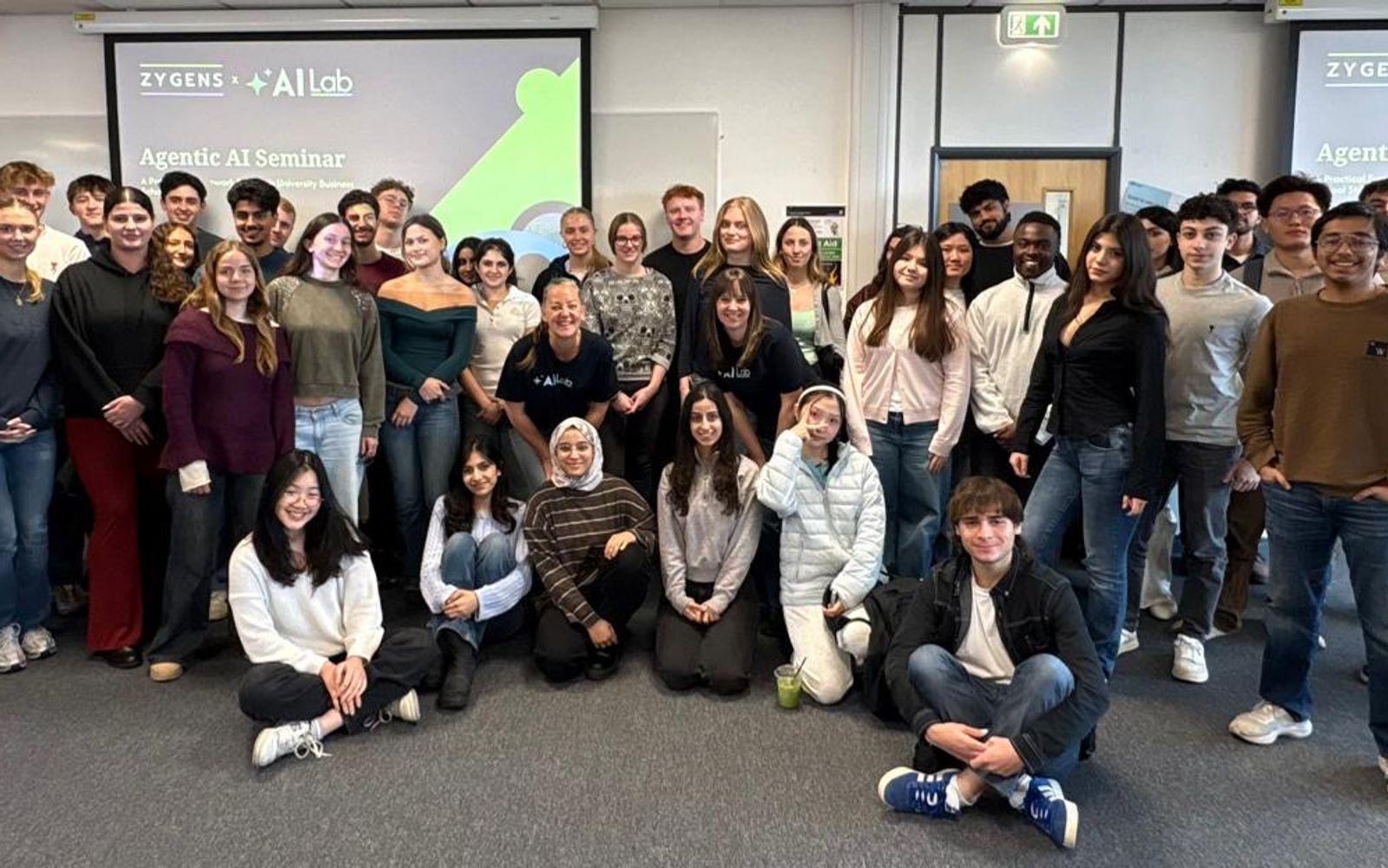
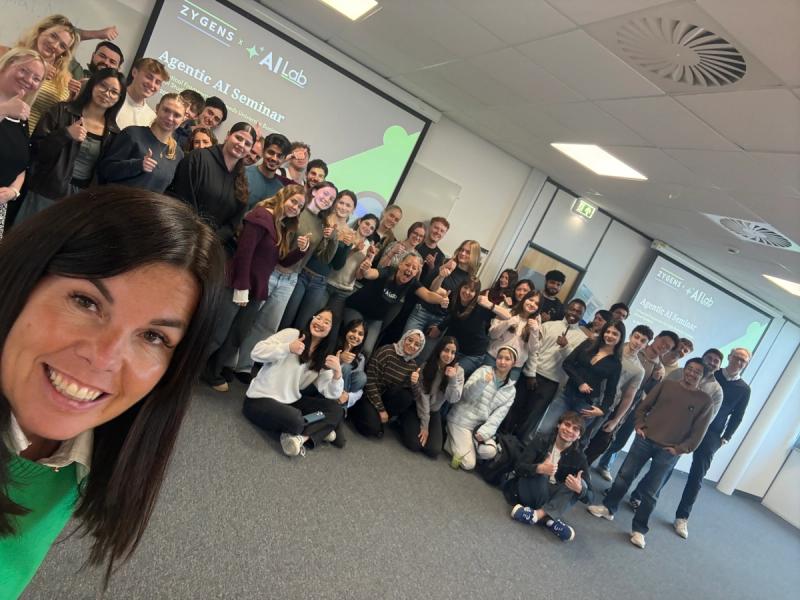
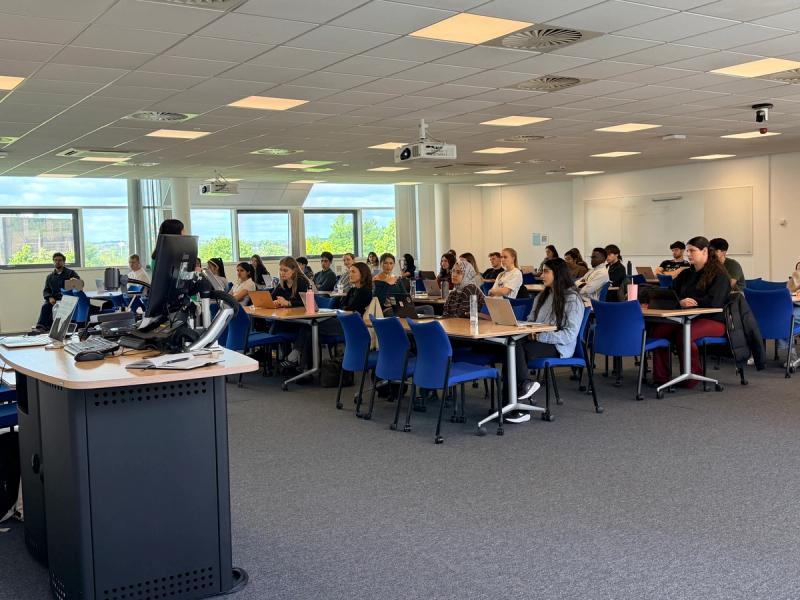
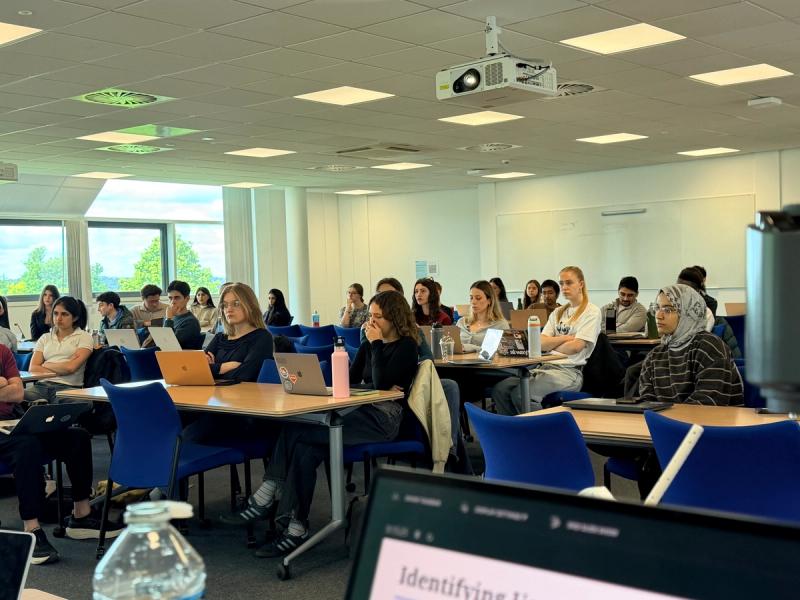
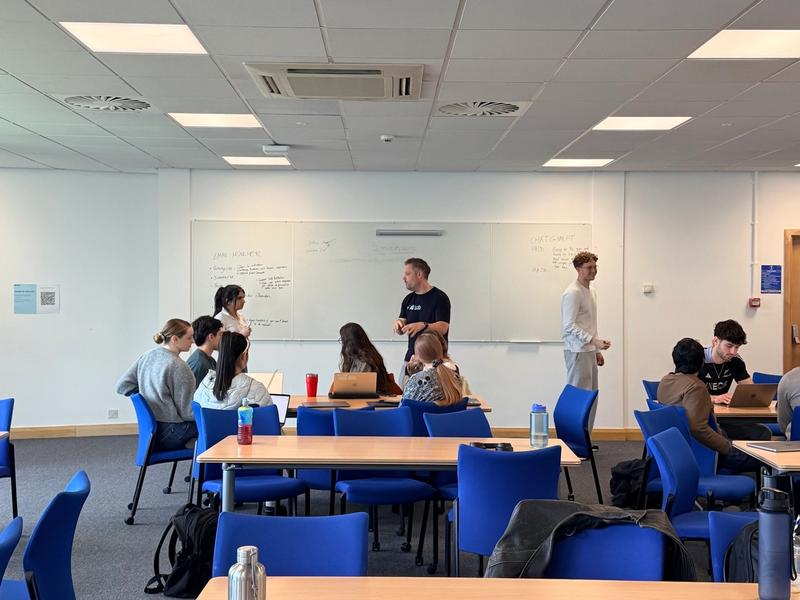
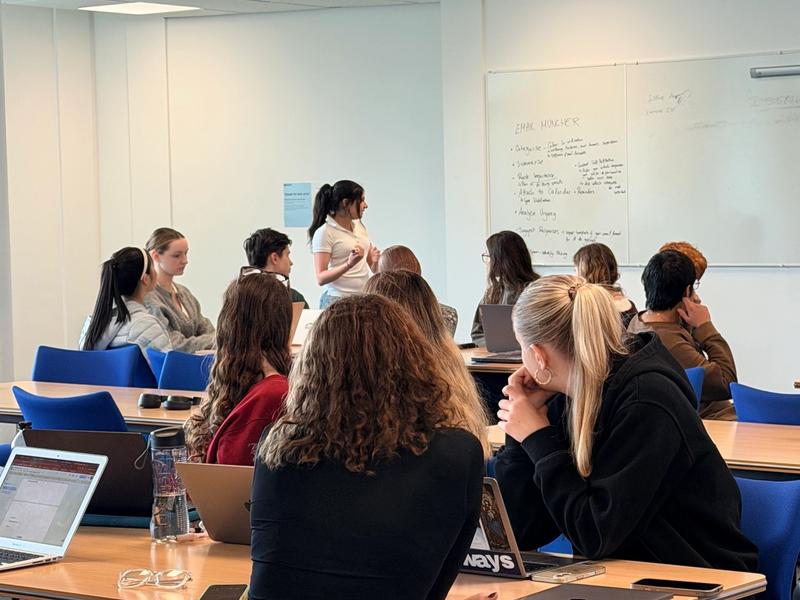
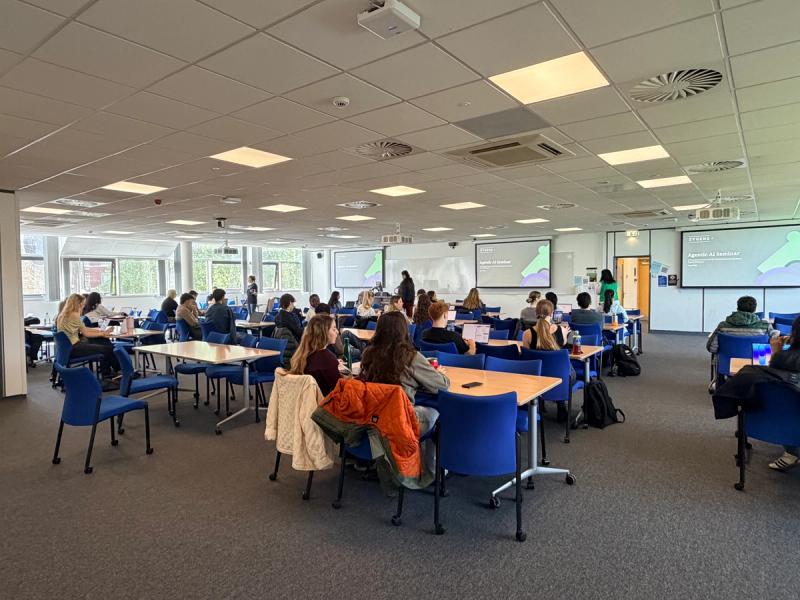
The session started from where students actually were, not where a curriculum assumed they would be. Rather than opening with a definition of a large language model, it opened with the question of why any of this matters to someone about to apply for their first graduate role. From there the room worked through prompting properly — not "ask it a question" but structuring an instruction so the output is usable. Students then applied it to things they cared about immediately: CVs, cover letters, application questions, the repetitive admin of job hunting. That is where the mood in the room changed. The shift was less about the technology being impressive and more about students realising they now had something concrete to say about it to an employer. The responsible-use conversation was not a bolt-on at the end. Accuracy, limits and what you can and cannot hand to a tool came up while students were mid-task, because that is when it becomes real. The clearest signal came in what students asked for at the end: more practical time, more technical depth, and more sessions. Not one of the common requests was for a better introduction. They wanted the next thing. That request shaped the Agentic AI Lab that ran with the MBA cohort a month later.
Gallery
From the day
Related stories
More proof from the labs
Already using AI, missing the guardrails
This LUBS group didn't need persuading. Between them they were already running six AI tools across research, job applications, revision and planning. What none of them had was a way to judge when to trust the output. The session put reliability, bias and accountability at the centre, then split the room into three teams, who each designed and built a working agent in three hours in Microsoft Copilot.
Read the story
Students name the problem, then build the agent
Forty-one LUBS students opened the session with a word cloud that ran hot both ways, curious, excited, powerful, alongside privacy, fake news, replacement. AI Lab held both. By the end the room had named seven agent concepts, each starting from a real friction in their own lives: job applications, travel planning, food, fitness, finding a partner.
Read the story