
T Level students built working AI agents in two hours
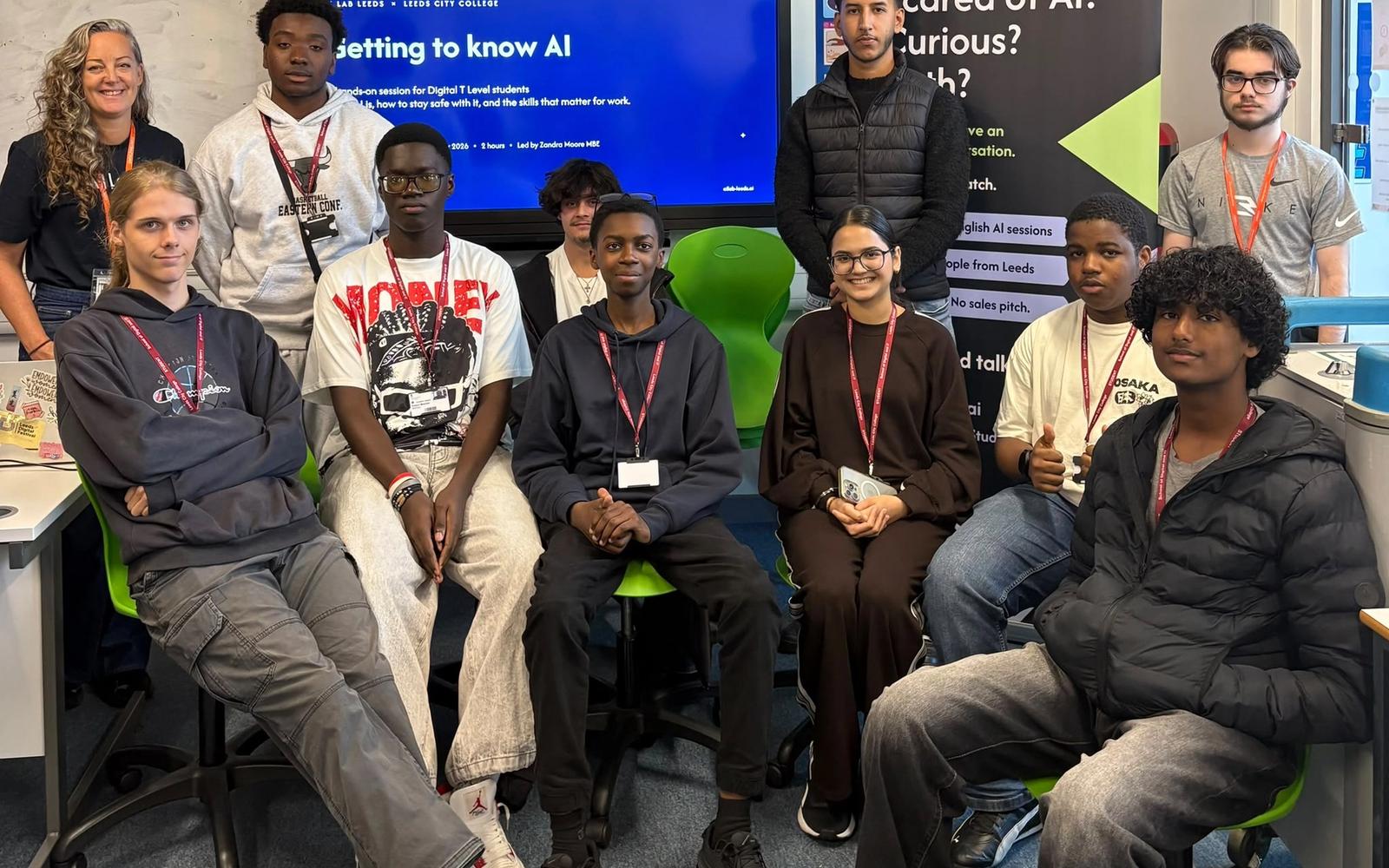
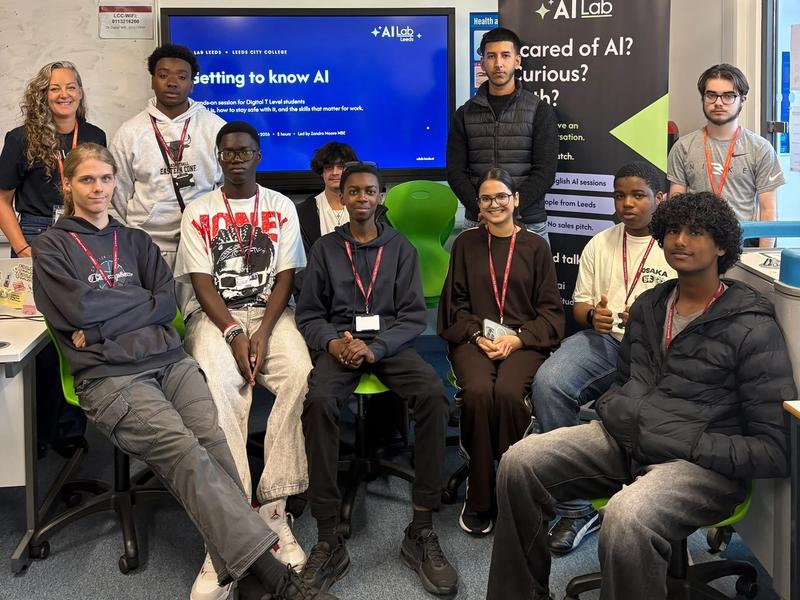
Twenty Leeds City College T Level students, three AI platforms, one afternoon

Leeds City College
Leeds City College, Printworks and Quarry Hill campuses, Leeds
The challenge
What we set out to solve
Leeds City College teaches T Levels as the technical route into work, so the gap between what students practise in class and what employers actually use matters more than it does elsewhere. Students arrive having used AI tools for homework, with no sense of how those same tools are used in a job, where they fail, or what makes one worth trusting. The college wanted something practical inside a two-hour slot: not a talk about AI, but students using the tools themselves and leaving able to explain what they had built.
What we delivered
How the lab was designed
- A two-hour hands-on workshop across two college campuses
- Students working directly in Copilot, Gemini and Claude
- A framework separating assistants, skills and agents
- Six real SME scenarios worked through as a group
- Safe-use and data guidance built into the build, not bolted on
What happened
On the day, in the room
The session opened on the distinction that does most of the work: an assistant answers, a skill repeats, an agent acts. Students then took six real jobs from six small businesses, one at a time, and voted with a show of hands on whether each one needed a skill or an agent. Chasing unpaid invoices on a 7, 21 and 30 day schedule. Turning site survey notes into a quote. Watching three competitor websites for price moves. The reveals gave them the reasoning, not just the answer: if nobody reads it before it reaches a customer, it is an agent and it needs guardrails. Then they built. Students worked across Copilot, Gemini and Claude rather than a single tool, which meant comparing how the same brief behaved in three places. What they chose to build said as much as the builds themselves. One went straight at the obvious need and made a CV builder. Another built a budget tech buyer to work out what hardware was worth the money. One built a research agent for film fans. One built a space communications replicator, which nobody had asked for and which worked. The pattern across the room was the same one that shows up with business teams: the first prompt rarely gives you what you want, and the students who got the best results were the ones who went back and tightened the brief rather than accepting the first answer.
What people built
Real tools, made by real attendees
Gallery
From the day
Related stories
More proof from the labs
Already using AI, missing the guardrails
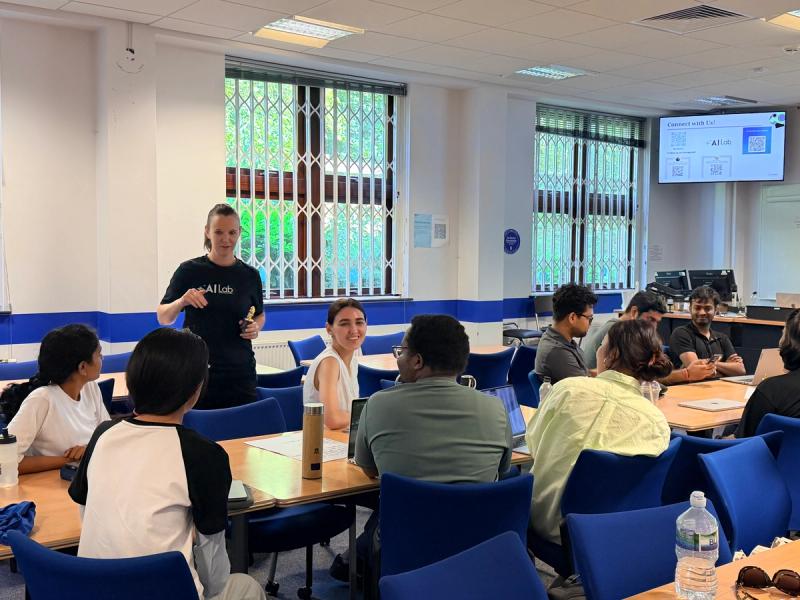
This LUBS group didn't need persuading. Between them they were already running six AI tools across research, job applications, revision and planning. What none of them had was a way to judge when to trust the output. The session put reliability, bias and accountability at the centre, then split the room into three teams, who each designed and built a working agent in three hours in Microsoft Copilot.
Read the story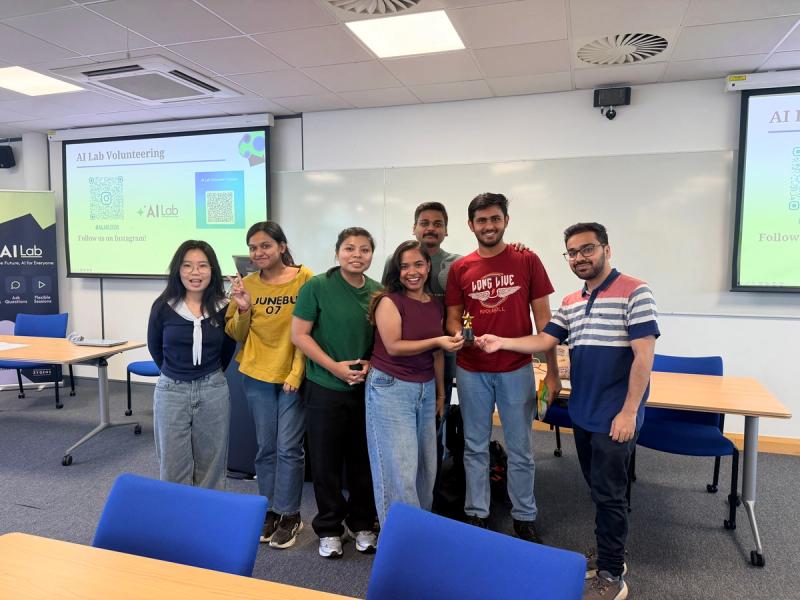
Students name the problem, then build the agent
Forty-one LUBS students opened the session with a word cloud that ran hot both ways, curious, excited, powerful, alongside privacy, fake news, replacement. AI Lab held both. By the end the room had named seven agent concepts, each starting from a real friction in their own lives: job applications, travel planning, food, fitness, finding a partner.
Read the story