The Data City turns AI interest into a roadmap
A four-hour hands-on session that gave every team its own agent shortlist

The Data City
Leeds, UK
The challenge
What we set out to solve
The Data City works with data for a living, so nobody in the room needed persuading that AI mattered. That was the problem. Twenty-seven people answered the pre-session survey and the answers pointed in a lot of different directions. Asked how confident they were of spotting a real AI opportunity in their own work, the team scored itself 3.2 out of 5, the honest middle, where people have used a chat tool but can't name one task in their own week they'd hand over. Plenty of interest, spread across five teams, and no first project.
What we delivered
How the lab was designed
- A four-hour practical session, from use cases to roadmap
- Pre-session survey of 27 staff to set the starting point
- Hands-on work with agents on participants' own tasks
- Prompting techniques practised, not presented
- Role-by-role use case identification across five teams
What happened
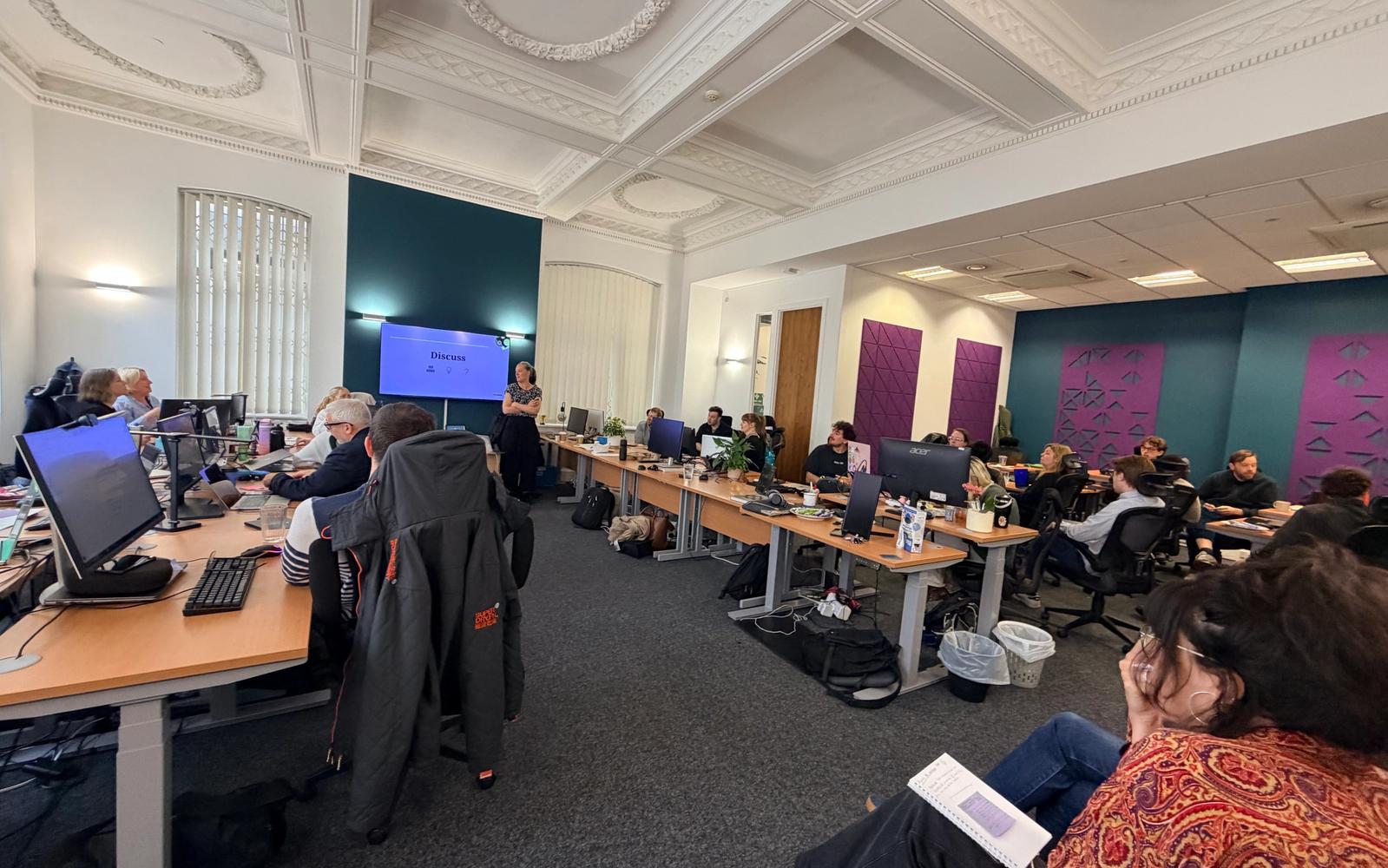
On the day, in the room
The session ran on the team's own work rather than worked examples. People brought the tasks that actually eat their week, and the room split naturally by role. Admin and operations went first for meeting overhead and planning. Compliance came up more than expected, the repetitive, evidence-gathering work nobody enjoys and everybody has to do properly, and several people picked it out as a strong first candidate. Engineering took a different route, going after the steady background drag that slows a small technical team down. Sales worked on pipeline and the documents that follow a good conversation. What people said was most useful was less about the tools than the framing. Understanding what agentic AI actually is, the difference between asking a chat tool a question and handing a task over, was the top answer. Claude Cowork came next, then the hands-on activities, then identifying their own use cases, then prompting technique. The order matters: the concept had to land before the tools were interesting. Average rating was 4.4 out of 5. Confidence in spotting AI opportunities in their own work moved from 3.2 before the session to 3.8 after, a real shift, but not a finished one, and the honest read is that a single session gets a team to a shortlist rather than to delivery.
What people built
Real tools, made by real attendees
Related stories
More proof from the labs
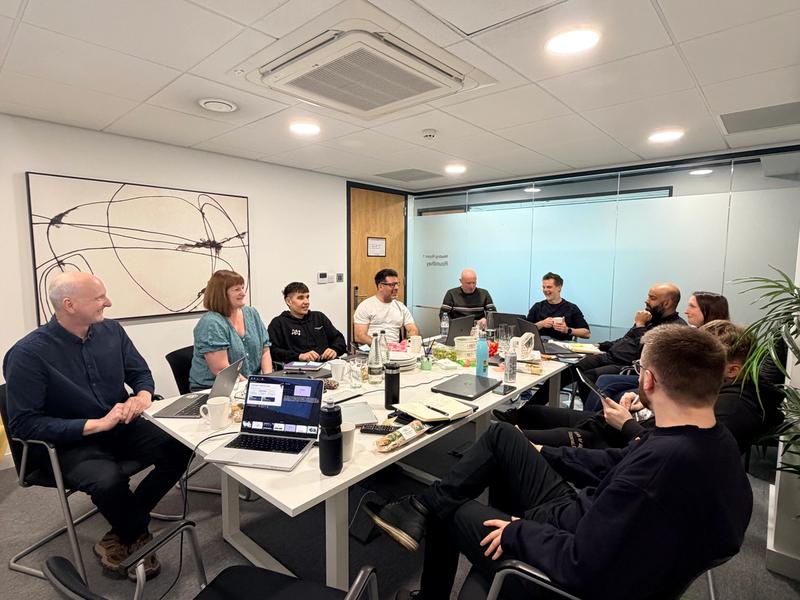
Twenty-two agents in four hours
Exalto Consulting, a Leeds recruitment and advisory firm, had people across the business using AI tools on their own terms — but no shared way to decide what was worth building. One half-day session with nine of the team produced twenty-two defined agent use cases, sorted and prioritised, plus a scoring framework they still use. Early agents were in internal testing within the week.
Read the story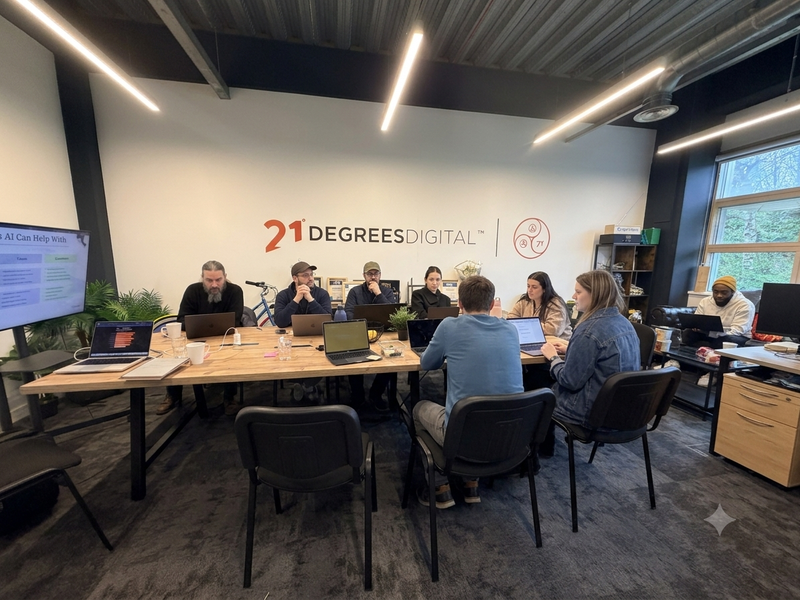
32 AI agent use cases in 3 hours
21 Degrees Digital had an AI policy, a team already using ChatGPT and Claude, and a CEO who could code. What they did not have was a way to decide what to build. Nine of the team spent three hours in Holbeck and came out with thirty-two agent use cases, and a sharper reason to build them than anyone walked in with.
Read the story