Twenty-two agents in four hours
A Leeds recruitment firm turned scattered AI use into a working pipeline

Exalto Consulting
Leeds, UK
The challenge
What we set out to solve
Exalto Consulting is a Leeds recruitment and advisory firm working in tech and data, set up in 2022 to raise standards in a market that had gone commoditised. They were not starting from scratch with AI — several of the team used tools daily and a few had pushed further on their own. The problem was that none of it joined up. No shared framework, no way to rank one idea against another, and no route from someone trying something out to the business actually building it. What they needed was not another tool.
What we delivered
How the lab was designed
- One half-day, in-person session with nine of the Exalto team
- Attendees spanning leadership, delivery and operations
- A pain-to-gain mapping exercise run across every business function
- The Zygens Agent Framework, applied to their own workflows
- A working distinction between chat-based AI use and agentic workflows
What happened
On the day, in the room
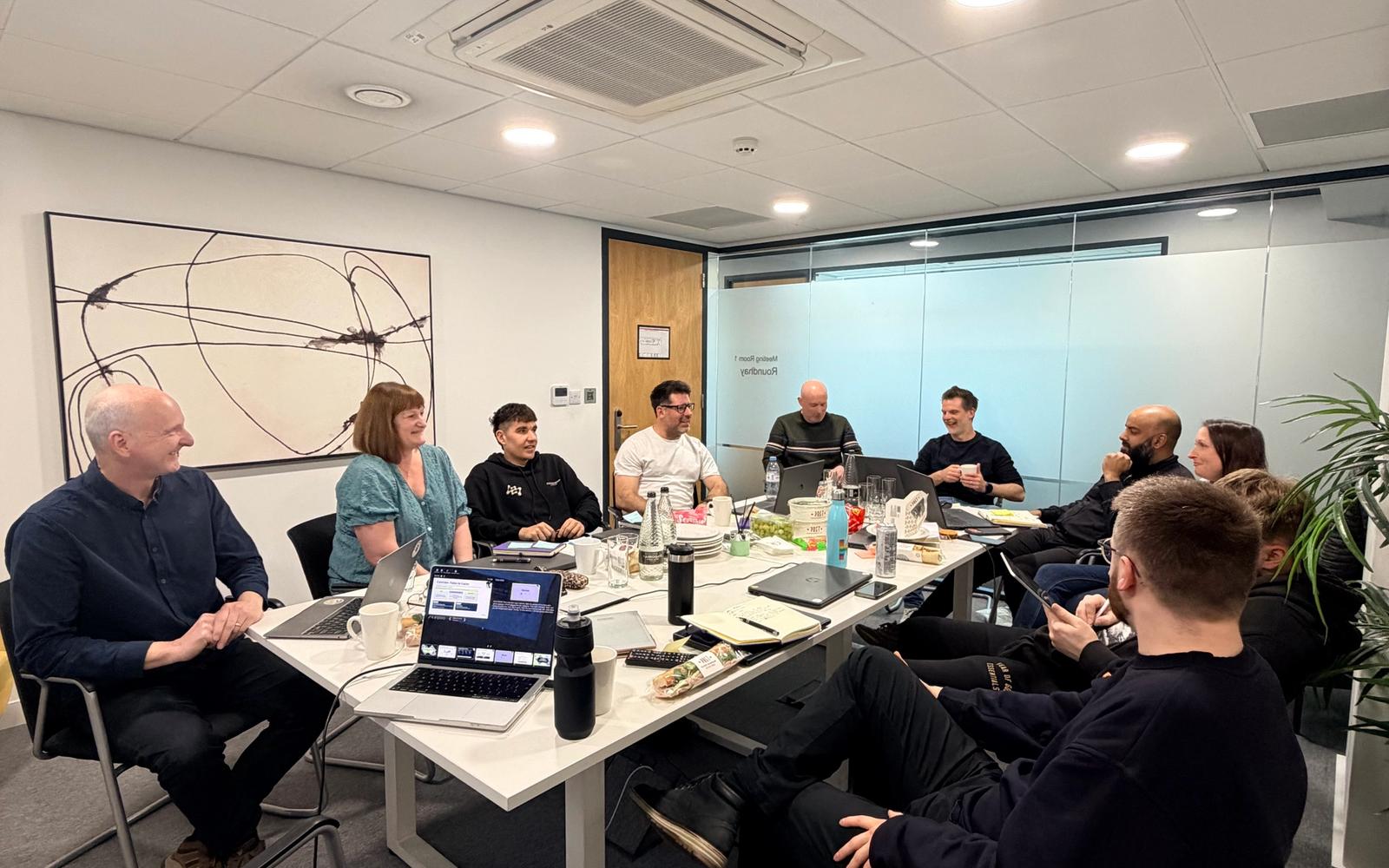
Nine people, four hours, one room. Leadership, delivery and operations all sat in on the same session, which mattered more than it sounds — a lot of the value came from delivery people hearing what leadership actually wanted, and the other way round. The session skipped AI theory. Charlie Bartle facilitated, and the first job was separating two things people had been using interchangeably: asking a chatbot for help, and building an agent that does a job. Once that distinction landed, the room stopped talking about tools and started talking about work. From there it was pain-to-gain mapping, function by function. Every part of the business got pulled apart and looked at through an AI lens — recruitment, delivery, internal operations. Where does time go. What gets done twice. What nobody wants to do. Twenty-two use cases came out of it. The useful part was not the list. It was that by the end the team could rank the list themselves. They had a way to weigh value against risk and a scoring approach they could apply to the next idea, and the one after that, without needing anyone back in the room. Within a week, early agents were being tested internally and a draft AI strategy had been written straight off the workshop outputs. The team went at the low-risk, high-impact items first to get something working rather than something impressive.
What people built
Real tools, made by real attendees
Related stories
More proof from the labs
The Data City turns AI interest into a roadmap
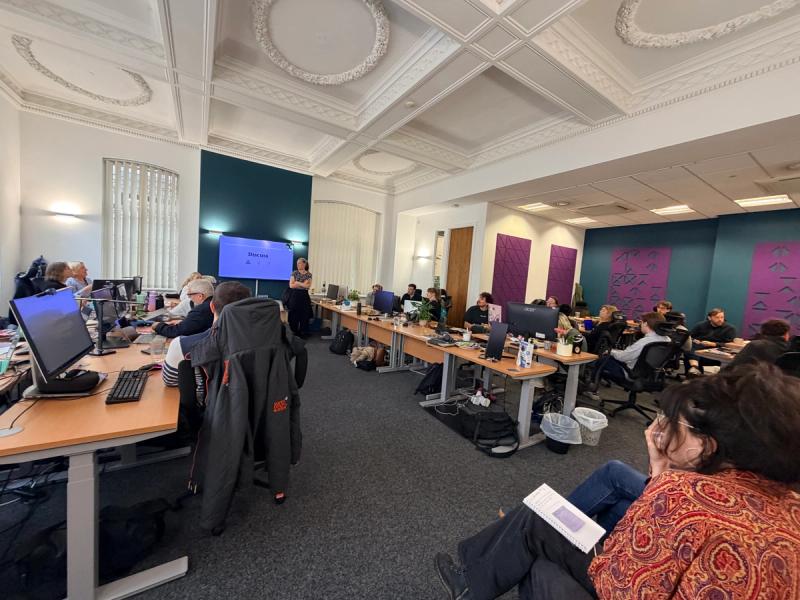
The Data City came in with broad interest in AI and no shared view of where to start. Over four hours the team worked through their own tasks, built prompts, and tried agents on real work. They left with use cases named team by team — admin, sales, engineering, delivery and operations - and a roadmap to work through rather than a general enthusiasm.
Read the story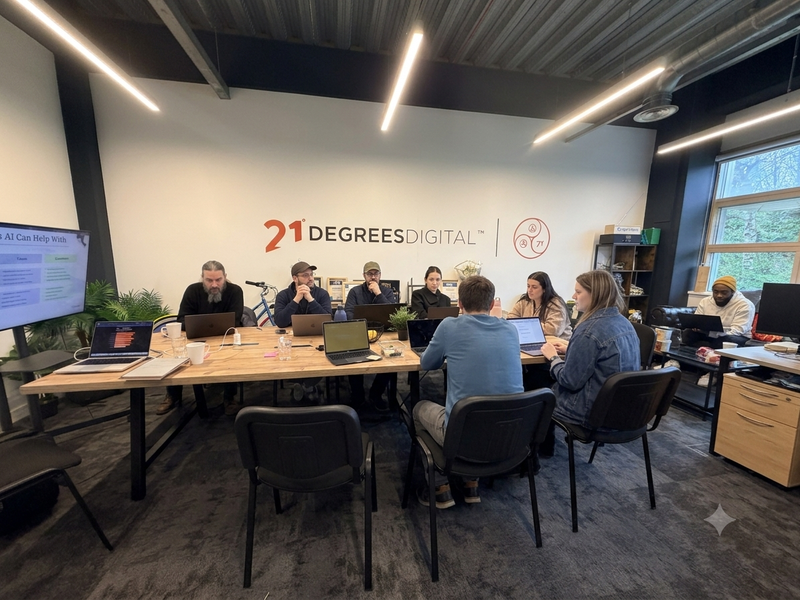
32 AI agent use cases in 3 hours
21 Degrees Digital had an AI policy, a team already using ChatGPT and Claude, and a CEO who could code. What they did not have was a way to decide what to build. Nine of the team spent three hours in Holbeck and came out with thirty-two agent use cases, and a sharper reason to build them than anyone walked in with.
Read the story